

When rewilding the weedy median proves difficult
Change is scary; change is contagious

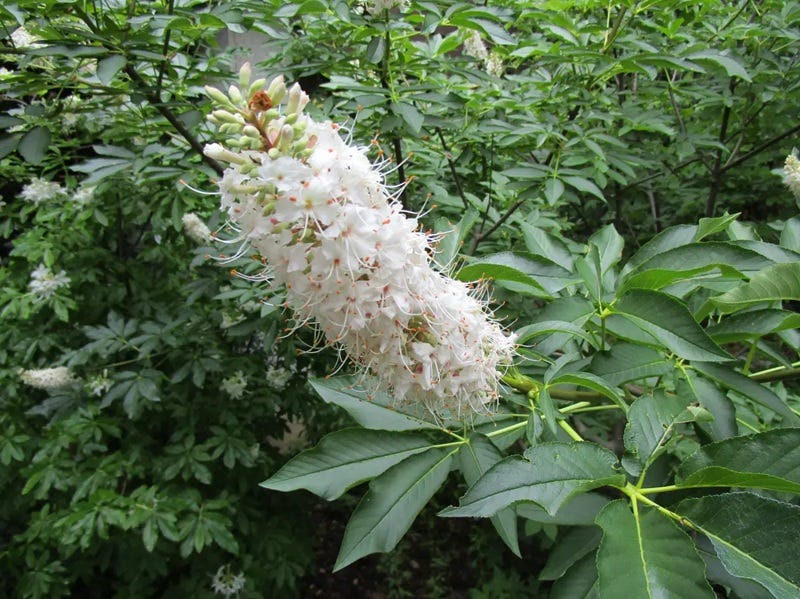
Most of the environmental success stories I write about at Earth Hope only came to fruition after incredibly hard work and immense heartache. To change entrenched systems requires steadfast determination. Any good idea will likely be met with mountains of old thinking, piles of outdated laws and legions of paper pushers who are just “doing their job.”
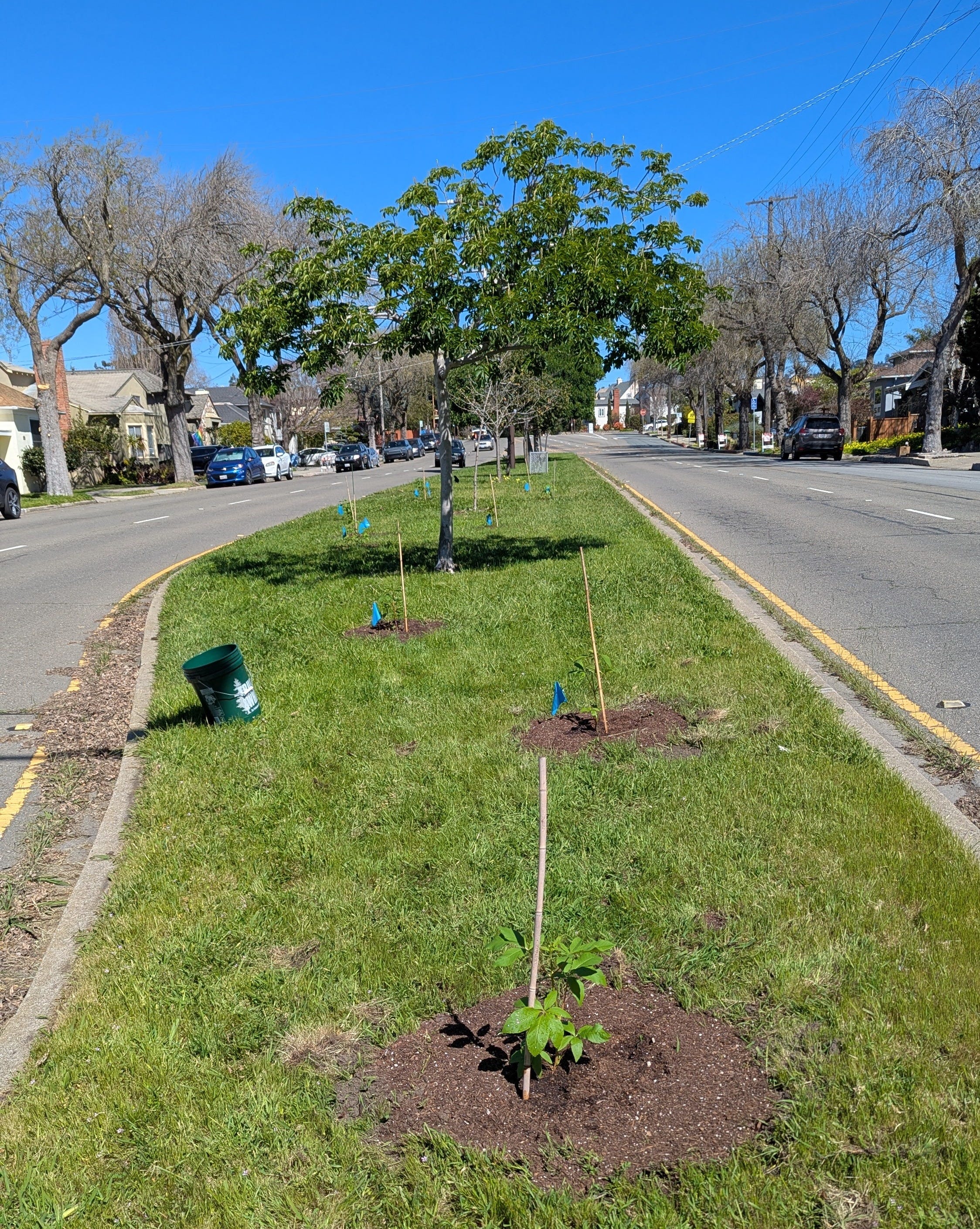
This week I experienced a microcosm of this when the city told my neighbor and rewilding co-conspirator his California buckeye saplings are “road hazards” and would be removed. On Saturday, he’d planted ten saplings in the weedy median across from my house. I’d agreed to water them, since I live nearby and have a spigot.
Turns out, my associate is a “rogue tree planter” who is making the parks department employees’ jobs more difficult, and the plants are a liability because their branches might whack a truck when they mature in 15 years.
The city’s greatest concern? People might be tempted to COPY us elsewhere across the city.
!!!
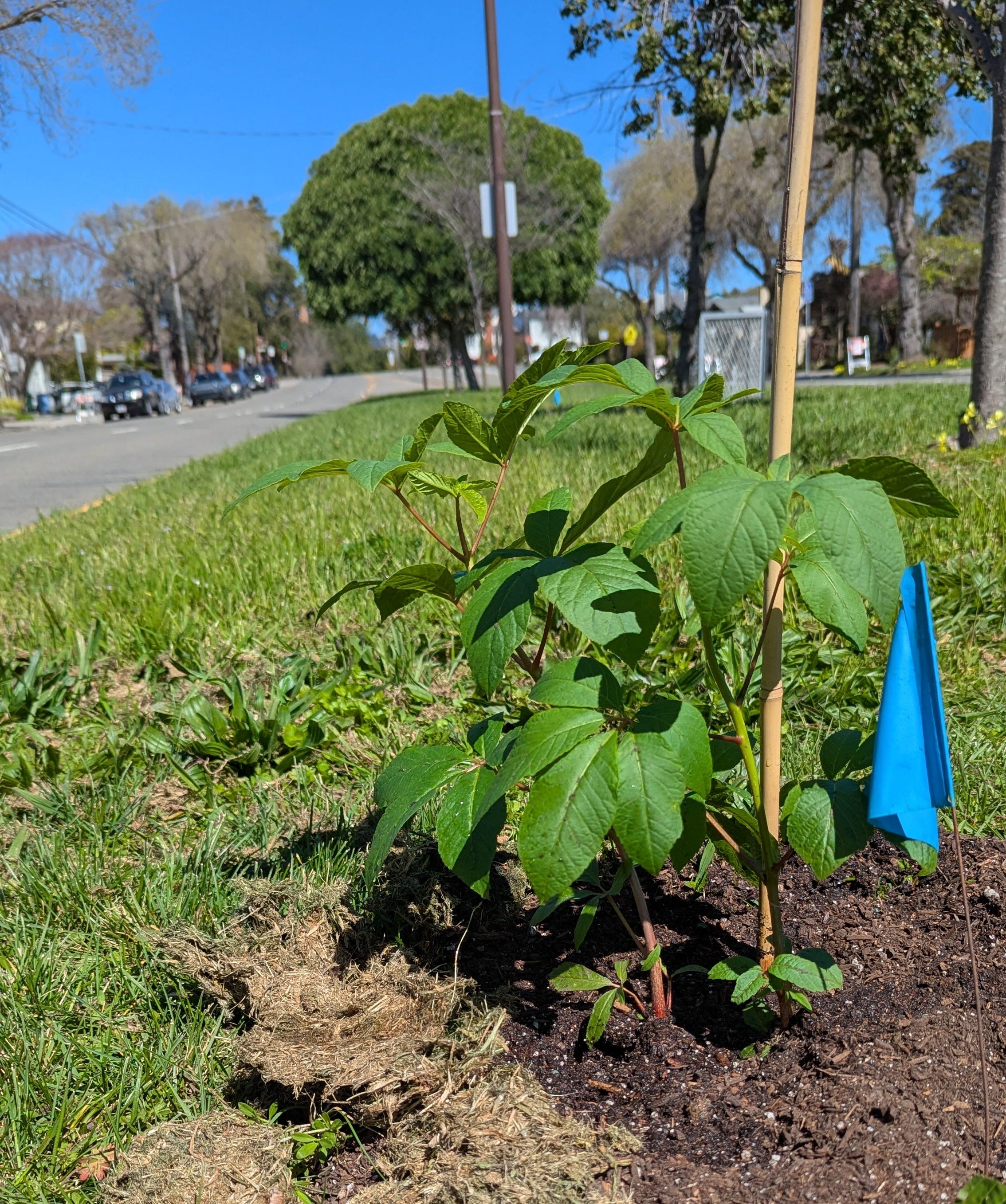
As difficult as this news is to bear, I know the way forward. I’m told that my dreams may meet less resistance if I create a neighborhood volunteer group and a cooperative agreement with the city on weeding and plant height. OK! I can do that. I’ll probably also leverage the fact that federally endangered monarch butterflies love this neighborhood in the fall, and what better place to host more milkweed than an unused median?
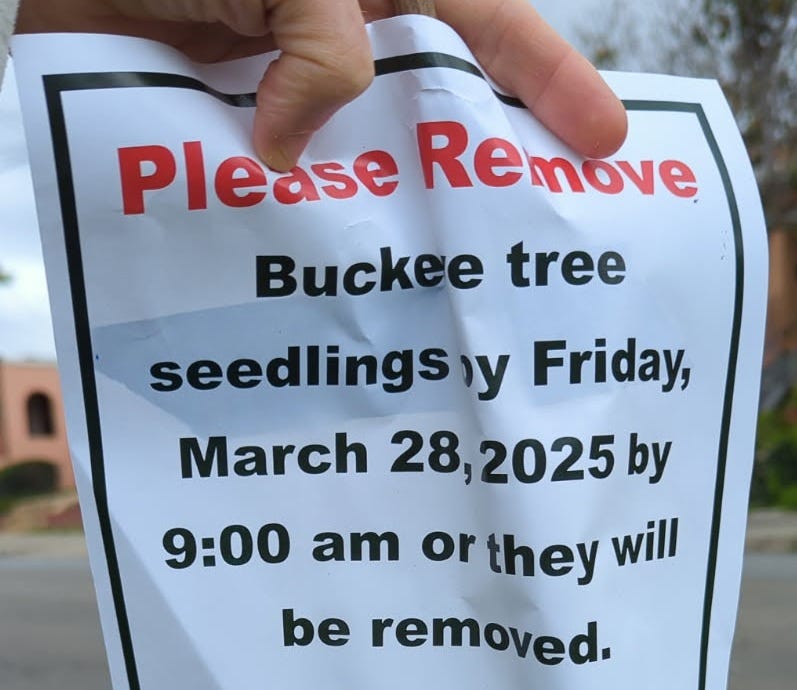
To be clear, we’d called and emailed several city staff to seek permission to plant some trees, some of whom did not respond at all and some of whom said, “Act first, beg forgiveness later.”
I could have skipped mentioning this setback in this newsletter, but I want to take readers on this journey with me. Drama adds spice to any narrative, right? And, I’m pretty sure there will be a happy ending. Fair warning: Readers will have to be patient. This could take years.
The weedy median made its first appearance in this newsletter last fall, at the end of “Pocket forests are popping up everywhere,” where I expressed an urge that I’d had for many years.
Out my front window, a weedy street median stares back at me. It’s wide, maybe 10 yards, and spans a quarter mile of boulevard. The mature California buckeye trees growing in its center are lonely. In the hills, they’d be crowded in with oaks, blackberry and thistle. The city staff drive a big gas-powered mower twice a summer when the weeds get too tall.
I’m going to claim that square. I’ve been thinking about it for years. Why not do it now?
Change is scary; change is contagious
Nobody likes change, even when it’s for the better. I learned this in my corporate communications jobs, which often overlapped with a field called “change management.” Even when a new way of doing things will save us hours of work, we resist and gripe and put off adopting the change. Our brains feel a repugnance toward the new. Safety lies in doing things exactly as we’ve always done them.
I’m no scientist, but I wonder if we can better leverage psychology in the environmental protection movement. Humans don’t like change, but we do love imitating or engaging in copycat behavior. Psychologists believe this is so ingrained in us because it’s part of how we learn as children. As adults, our tendency to copy each other often morphs into trends that make little sense.
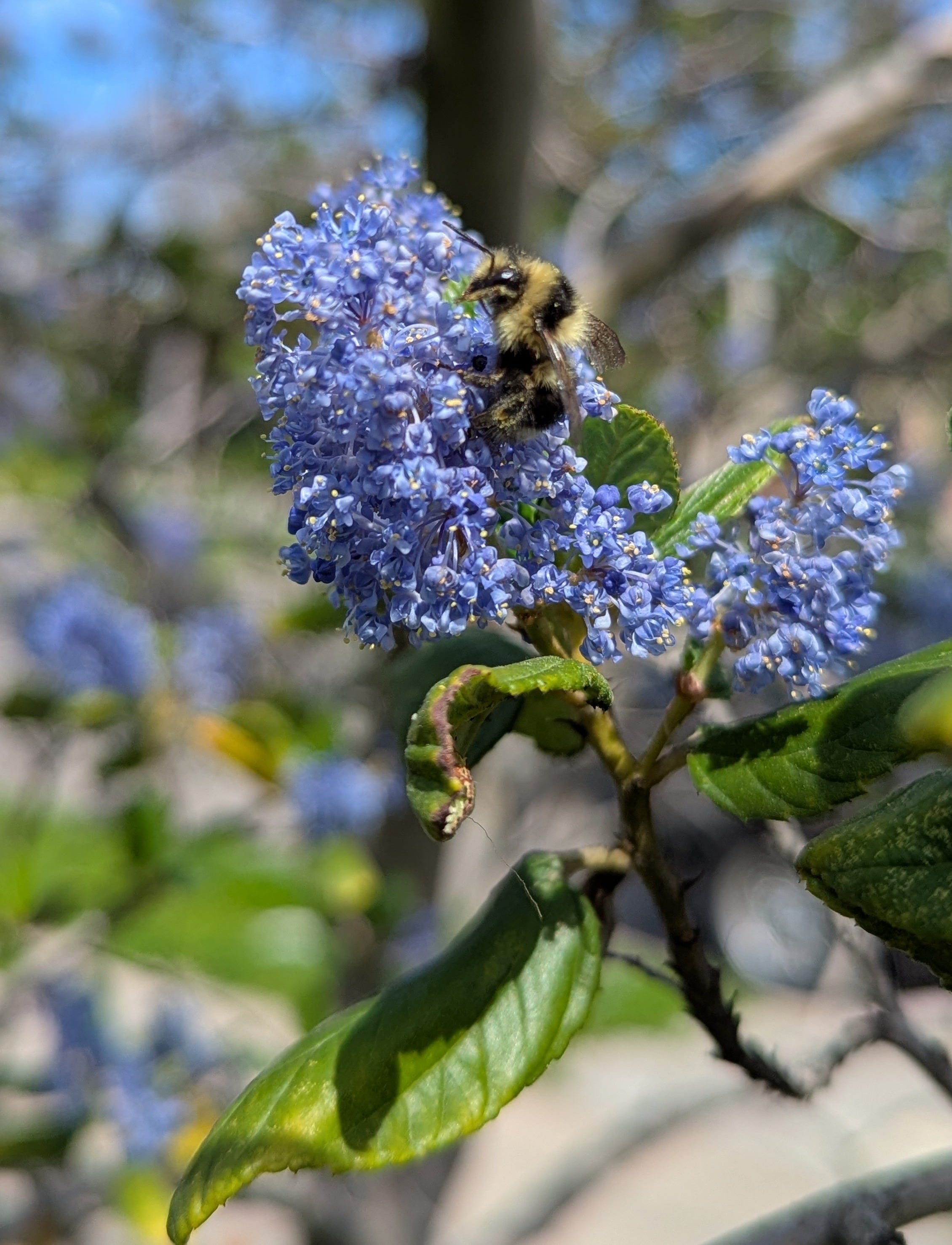
People are ditching lawns across Europe and America because of the ecological benefits and time and money savings. But why did we originally “love” lawns so much? Apparently, it’s because some rich people liked lawns several hundred years ago, and we are still copying that trend.
The American Wildlife Foundation explains it succinctly in “Lawns as a Legacy of Luxury”:
Lush, manicured lawns are deeply rooted in the aristocratic traditions of Europe. Originating as a luxury of the European elite, the concept of the lawn as a landscape feature of manor houses was not merely an aesthetic choice, but a potent symbol of wealth and social standing.
In the grand landscapes of 17th and 18th-century European manor houses, expansive lawns served as the canvas on which the aristocracy could express their dominance over nature and display their economic might.
Hmm. I’m not interested in that. Are you?
Lawns are expensive, require mowing, and are often overfertilized and chock-full of chemical herbicides. And they don’t feed anything like bees, butterflies and other bugs and animals. Luckily, my city banned herbicides a while ago. That’s why the median is full of weeds.
This brings me to my conclusion. Why am I so obsessed with rewilding this median? Because a wild median thrives a mile down on the same boulevard.
I’m just a COPYCAT!
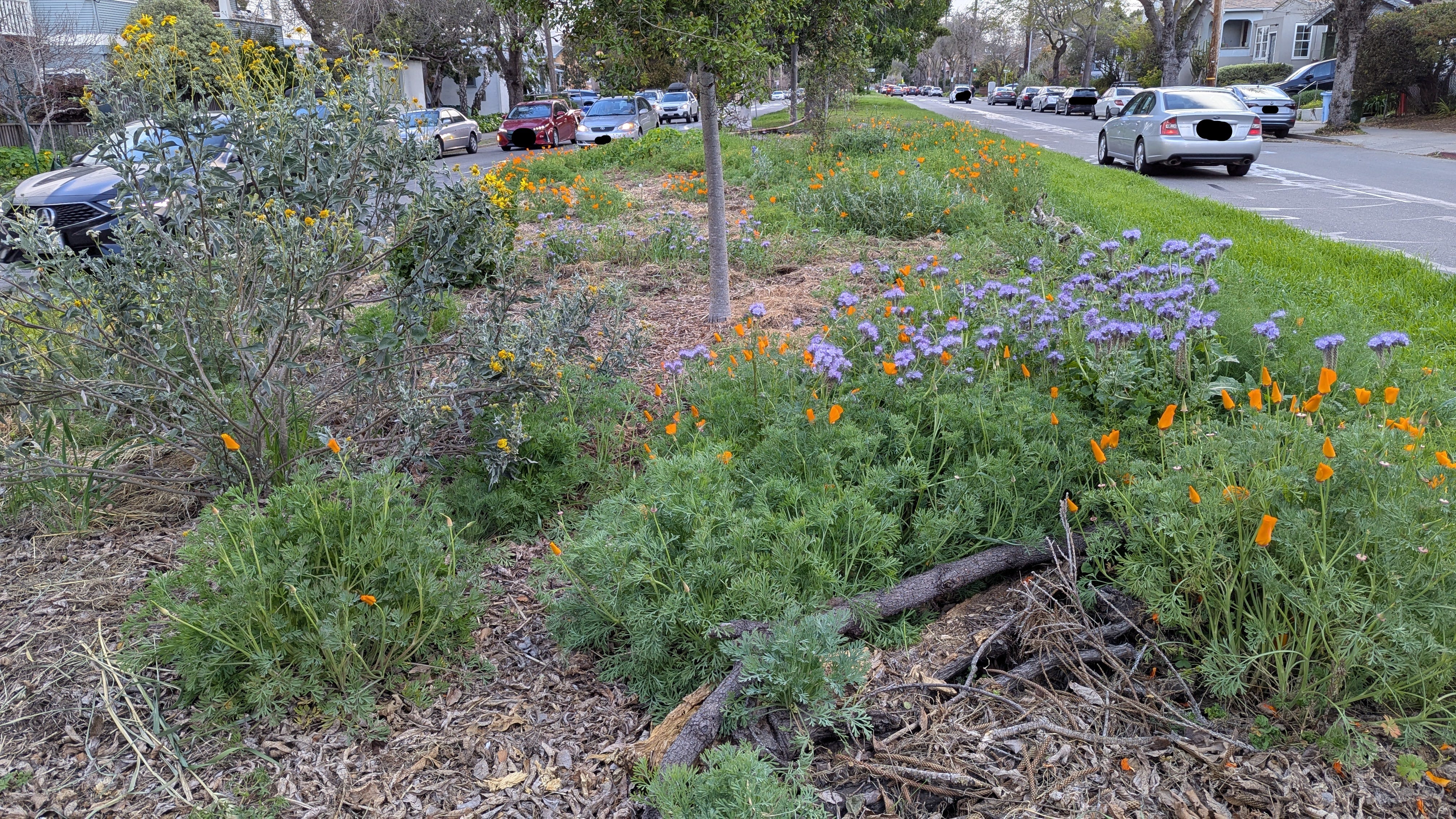
“Whatever part of the Earth you can touch, you can heal.”
— Janine Benyus, author of “Biomimicry: Innovation Inspired by Nature”
Substack headlines of interest: Let rivers roam free; bees like cities
- wrote “The paradox of patient urgency,” which more eloquently captures the predicament I’m trying to relate above, and “Let rivers roam free!” which summarizes a study he and others published in Nature Water on the ecological benefits of allowing rivers to expand across their floodplains.
- wrote that cities are great places for native bees, according to new studies. This story pairs well with mine above.
FYI, I’m partially offline for the next ten days and won’t be able to read, like, restack or share as much content.
BBC: Rescued Ukrainian lions touch grass for first time
This one’s for you,
.The BBC reports:
Rescued lions from war-torn Ukraine have taken their first steps outside at their new home in Kent. Rori, Amani, Lira, and Vanda have joined Yuna, who was brought to Kent in August 2024, following a 10-month rescue mission.

Beaver alert: Northern Mexico and Arizona partner to restore San Pedro River
In light of upsetting news of how the U.S. is treating its closest neighbors and allies, I wanted to share this Arizona Public Media video from a couple years ago of how communities on the U.S./Mexico border partnered to restore the San Pedro River by bringing back beavers. Beavers were captured where they’d become a nuisance in Phoenix, Arizona, and relocated on the river to the south. Soon, they’d multiplied and spread to Northern Mexico, where beavers had been extinct for over a century due to extensive fur trapping in the 18th and 19th centuries.
“We have a saying in Mexico when it comes to river restoration: ‘Mejor castor que tractor.’ It’s better a beaver than a tractor,” says ecologist Joaquin Murrieta in the video below. “Why do I need to be doing restoration when a beaver can do it better than we do? And they’re free and they propagate. And they’re cute!”
About Earth Hope:
Earth Hope is a solutions-based journalism project that highlights environmental success stories from around the globe, because hope is the foundation of progress. I’m Amanda Royal, a former newspaper reporter and current eco-news junkie. Read more about this project and what inspired it.
Visit earthhope.substack.com for more stories. Visit my Services page if you’re a writer who’d like some help figuring out Substack.
Hope the re-wilding the median project will work! And... we should all try to be copycats of these types of projects :) Also love the story about the beavers and San Pedro river!
I love this and I hope you guys are able to continue with the weedy median! Thanks for the background info on the lawns. I hate them even more now. The beaver story made me smile so hard. Great post!