

We cracked the rage algorithm
We can elevate hope, beauty, grace, and love without sacrificing concern. Plus, HOPEFUL HEADLINES about salamanders, good fire, sea turtles, oil rigs, ethanol, soil, birds, grizzlies, and ... SALMON!

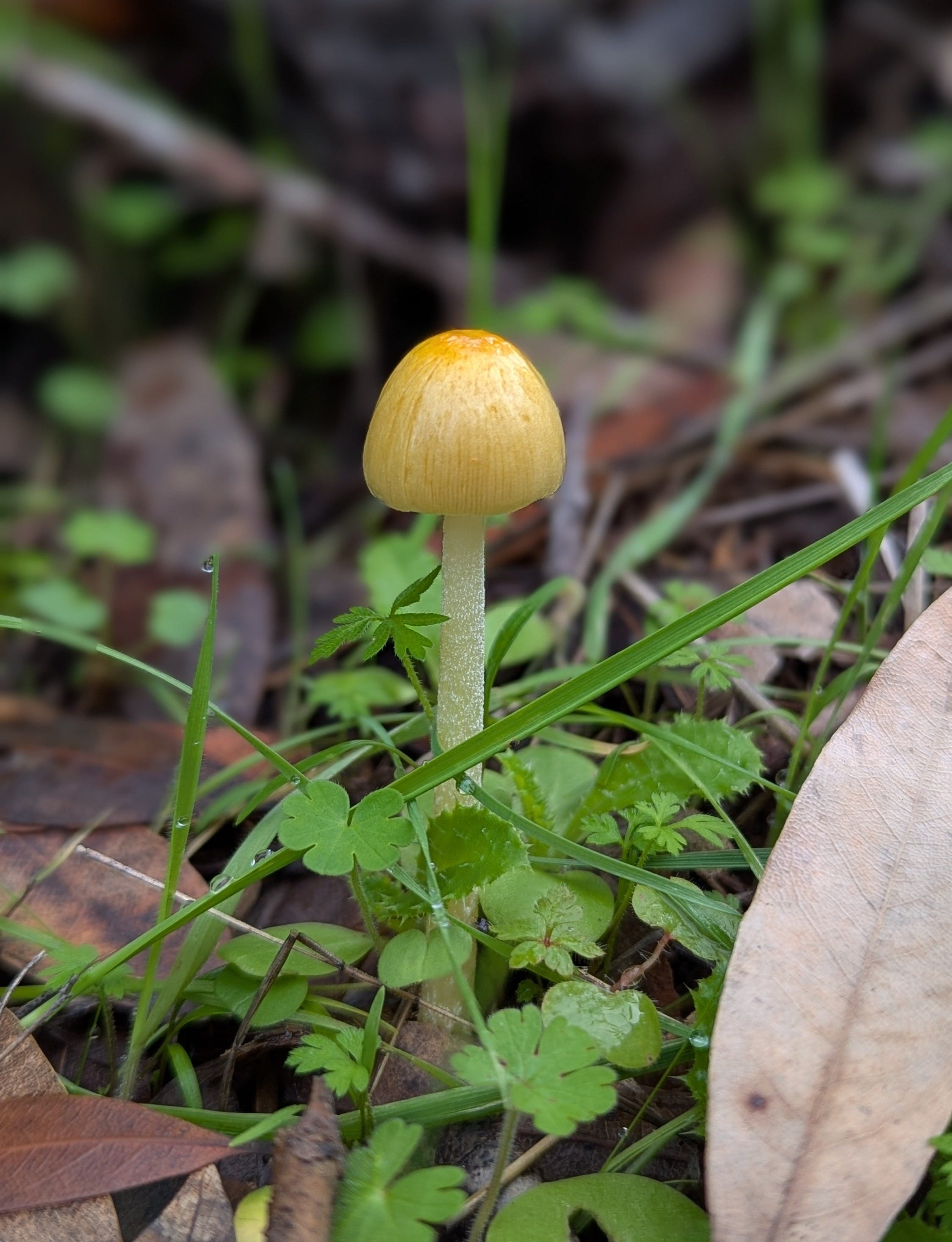
A beautiful thing happened while I stepped away from my computer last week to host visiting parents. Earth Hope’s readers cracked the algorithm by giving more than 1,000 likes on our post titled “‘Salmon everywhere’ one year after Klamath River dam removals.”1 Many of the biggest writers on Substack never earn that many likes. For instance, an article the same week by Substack’s #1 environment writer, Bill McKibben, garnered only 215 likes with the fearmongering headline “World on Fire.” The man has 105,000 subscribers. We have around 2,900.
Full respect to Bill for the work he does; I’m simply making a point. I’m inviting my dear supporters to bask with me in this momentary glory. I also hope all environment writers take note. I’ve written so many times: Rage and fearmongering are turning people away from, not toward, environmental issues. When we write about problems, we must also write about their solutions. And when we achieve successes, we must shout them from the rooftops.
A random algorithmic blessing, or a clear sign from the people?
Every once in a while, a meme floats around depicting a lovely medieval queen, Lady Algorithm, blessing a worthy follower as he bows to her while his content goes viral.
In fact, algorithms are not beautiful or feminine. They are machines. And we are their unwitting slaves. They’re tracking every swipe of our thumbs, every momentary pause as we scroll. Most algorithms are designed to capitalize on our rage and fear, with a secondary emphasis on our love for cuddly animals. What’s remarkable about the salmon story going viral is that it wasn’t packaged with an adorable fluffy animal or any other kind of clickbait. It was plain old-fashioned good news, delivered in a just-the-facts way. No gimmicks. No tricks.
Good job for liking the heck out of that, you wonderful people!!! You reaffirm my faith in humanity.
Now, I do wonder if this wild ride had anything to do with the Substack platform. Rather than a benevolent fairy queen, the Substack algorithm is managed by a beanie-wearing guy named Jairaj Sethi (a co-founder and CTO). In an interview with CEO Chris Best, Jairaj explains that the Substack algorithm does not aim to keep readers scrolling (on ad-based platforms, more time scrolling means more ads viewed) but rather to connect people with content they want to read and ultimately pay for. Still, as Substack leaned into political news last year, it became hard to keep our feeds rage-free. If we slow down for just a moment and hover over fear-based content, the algorithm might catch us gawking and force-feed us more. Curating a beautiful feed requires great effort.
Chris and Jairaj: People want to read hope-based content. Can we have a GOOD NEWS category, please?
I don’t think Chris or Jairaj are actually going to pay any attention to me, so I want to put this out there, in case anyone with resources, connections, coding and app-building skills, or other innovative hacks is reading: HOW DO WE BUILD A 100% HOPE-FOCUSED MACHINE?? Contact me. Let’s make it happen.
As for humanity’s incredible ability to fix past mistakes, Emma Marris, writing for The New York Times of “The Salmon that Surprised Everyone” agrees with Earth Hope:
Claiming we are already in the sixth mass extinction event suggests that the threatened species are already doomed and there’s no possibility for them to recover.
… But many species and ecosystems can rebound even when we take relatively simple actions to protect them: Look no further than the bison, elephants, humpback whales, egrets, bald eagles and many others that have shown that recovery is possible.
GIVING TUESDAY PROMO: BOOST EARTH HOPE FOR $20.
HOPEFUL HEADLINES
American West: Good fire makes good carbon storage
A study from the University of California at Berkeley has found that prescribed fires boost the carbon-storing abilities of old-growth forests.
A new long-term study shows that, while prescribed burning may release carbon dioxide in the short term, the repeated use of controlled fire may boost a forest’s productivity, or carbon sequestration capacity, in the long term.
“Over time, we found that the productivity of unmanaged tree stands decreased, likely due to increased competition and climate stress. Meanwhile, prescribed burning helped maintain large, fire-resistant trees, eventually increasing the productivity of these stands,” said study lead author Yihong Zhu, a graduate student at the University of California, Berkeley.
For more information on good fire and restorative thinning, check out our Earth Hope section on wildfire prevention strategies. (Thanks to Erik Olsen, who writes California Curated, for pointing me toward the study above.)
California: Sea lions, coral colonize old oil rigs
Speaking of California Curated, the post “Transforming California’s Oil Platforms into Marine Sanctuaries” will make you doubt whether we should ever tear down oil platforms.
Europe’s ban on neonic pesticides is helping birds
The Guardian: France’s birds start to show signs of recovery after bee-harming pesticide ban
Neonicotinoids are the world’s most common class of insecticides, widely used in agriculture and for flea control in pets. By 2022, four years after the European Union banned neonicotinoid use in fields, researchers observed that France’s population of insect-eating birds had increased by 2%-3%. These included blackbirds, blackcaps and chaffinches, which feed on insects as adults and as chicks.
Neonics are widely used in the United States for large-scale agriculture and pet flea control. At the same time, insect and bird populations are declining.
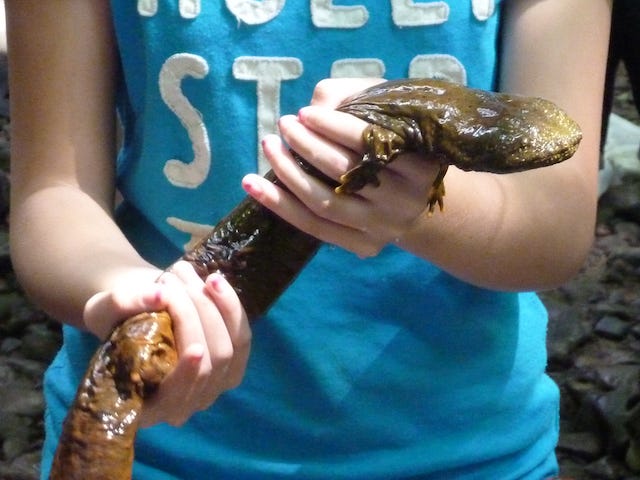
Ohio rivers welcome back “snot otter” hellbenders
Conservationists have released over 2,000 hellbender salamanders in Ohio rivers since 2012, including over 100 this past summer. Hellbenders are North America’s largest salamanders and can reach up to two feet long. They’ve gone extinct in many waterways, but those that have been released are thriving. They are nicknamed “snot otters” because of their slimy skin.
Columbus Zoo and Aquarium writes:
“This is quiet work that adds up,” said Greg Lipps, Conservation Biologist at Columbus Zoo and Aquarium. “One stream, one release, one more sign that clean water and wildlife can thrive together in our community. We raise these animals for years and then let them slip back under the rocks that shelter them. It takes patience, careful science and many hands, and we are grateful to our partners and neighbors who care for these waters with us.”
One stream, one release, one more sign that clean water and wildlife can thrive together in our community.
—Greg Lipps, Columbus Zoo
Soil is the planet’s biggest carbon capture “machine”
A while ago, I wrote a post titled “Life is carbon capture,” in which I listed all the ways that restoration and species protections can help with climate change. Restoring the natural world holds much more potential than carbon capture machines (billions invested over several decades with zero results). A commenter noted that I left out soil as the most potent nature-based solution. I’m grateful The Conversation has published this story: How soil could help us reach climate targets
Soil is a vital component of the climate system. It is one of the largest stores of organic carbon on Earth – containing more carbon than both the atmosphere and vegetation combined. This makes soil both a climate risk and an opportunity.
Ethanol, please go extinct
CleanTechnica: The Coming Slow Fade of America’s Corn Ethanol Industry
(Pumping polluting petroleum-based fertilizers into agricultural land to grow food that we then process into vehicle fuel is one of the most ridiculous things humans ever conceived.)

Greece: Protections help grizzlies and wolves rebound
The Independent reports that Greece’s predators are on the rebound, resulting in coexistence challenges.
Up to an estimated 870 brown bears roam the forests of northern Greece, according to the most recent survey by Arcturos, an environmental organisation set up in 1992 that provides a sanctuary for rescued bears and wolves.
And it’s not just bears. Wolves also have seen their numbers rise. While wolves could only be found as far south as central Greece in 2010, they have now spread to the outskirts of Athens and into the Peloponnese in southern Greece, Bakaloudis said.
(I live in California, where grizzlies are the state animal even though they’ve been locally extinct here for 100 years. Our black bear population is out of control in some places, so I do wonder how grizzlies might have shaped that balance in the past.)
UK: Record cattle birds returned when people restored wetlands
Farming with wildlife-friendly practices and protecting breeding habitats have welcomed back a record number of cattle egrets to a restored wetland in England. Cattle egrets eat ticks and form large breeding colonies near grazing cows, sheep, and horses.
From the BBC:
Once considered a rare visitor, the species first bred in Britain in 2008, when two pairs nested in Somerset following a large influx of birds that winter. Since then, their population has expanded, from occasional sightings to dozens of breeding pairs nationwide.
India: Volunteers count a million olive ridley sea turtle nests
Conservation and fishing gear regulations have increased olive ridley nests tenfold over two decades on Indian beaches. From NPR:
Conservationists thought olive ridleys had disappeared from this area decades ago, but in the early 2000s, a worker from an environmental charity stumbled onto a turtle egg shell nearby.
Soon, Upadhye was helping the charity identify turtle nesting sites and he fell “in love with sea turtles,” he says. He convinced the Velas council to ban seaside construction to protect nesting sites — because some of the surviving females born on this beach will return to lay their own eggs.
And finally: More GOOD salmon news from California! Bring down the dams!
Within two weeks of restoration work that improved fish passage, chinook salmon were documented in a San Francisco Bay Area creek for the first time in 70 years, according to a CalTrout announcement.
“We just wrapped up construction, and the fish are already finding their way home! It’s incredibly gratifying to see these incredible species reclaim crucial habitat that they have been locked out of for decades,” said Claire Buchanan, CalTrout Central California Regional Director. “This project remediates the last major barrier in mainstem Alameda Creek, and it was only possible after decades of advocacy and planning by the Alameda Creek Alliance, PG&E, Applied River Sciences, SFPUC, and others.”
GIVING TUESDAY PROMO: BOOST EARTH HOPE FOR $20.
We’re showing the powers that be that people want to read good news, solutions, successes, and stories of progress and hope. We’re bringing hearts and minds into the conversation, rather than leaving a wake of despair, hopelessness, and disengagement.
Unfortunately, these platforms run on money, and newsletters earning paid subscriptions are more heavily promoted. You can help elevate stories of progress with a one-time $20 offering. I won’t hold it against you if you choose not to renew at the end of the year. Our stories will always be free.
Finally, I want to thank all of Earth Hope’s paying subscribers who are helping elevate these stories. Earth Hope’s rise has everything to do with you. We’re going to be much bigger than a newsletter one day. You are amazing, and I’m deeply grateful to you.
About Earth Hope
Earth Hope is a solutions-based journalism project that highlights environmental success stories to inspire action. I’m Amanda Royal, a former newspaper reporter and current eco-news junkie. Read more about this project and what inspired it. I aggregate news under my “hopeful headlines,” conduct original reporting and interviews, and share occasional personal narratives. Visit earthhope.substack.com for more stories.


It’s still going. It’s not too late to like and restack the salmon story.
This is fantastic news and I have been saying the same thing for years. I am so happy to find someone else who is bringing positivity to environmentalism. I think that was also Jane Goodall’s greatest gift. She kept giving hope for our planet until the very end. She focused on hope. I intent to do the same and I’ve very grateful you are too.
Let's keep this going, read, like and restack ✨